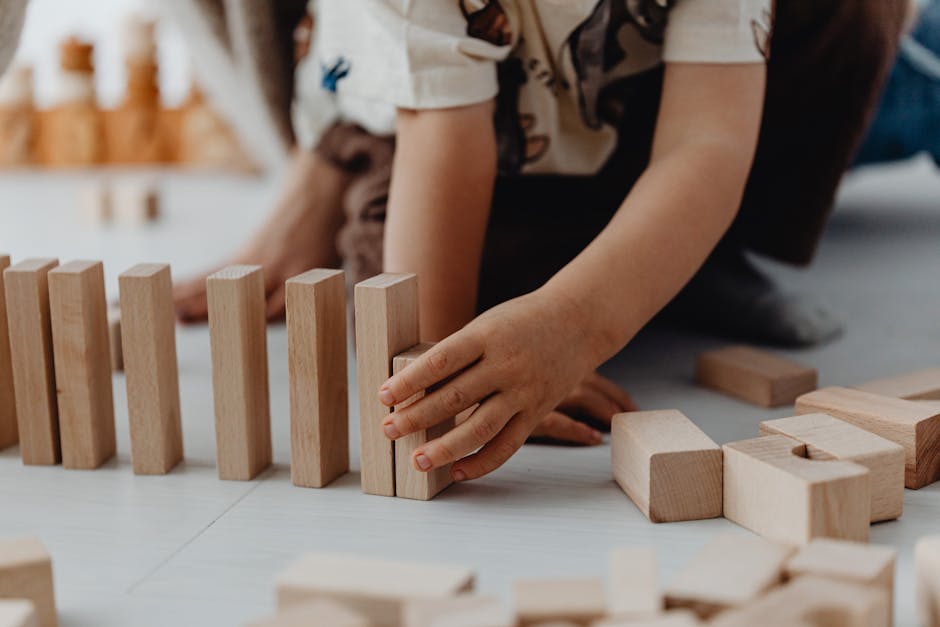
The Building Block Renaissance
Remember when a simple set of wooden blocks could entertain a child for hours? Fast forward to 2026, and building blocks are experiencing a renaissance as a crucial tool in child development. Far from being an antiquated plaything, building blocks have made a powerful comeback, integrating with technology while still preserving the essence of creative play. This resurgence is largely driven by a growing recognition of how these simple toys contribute to cognitive development, spatial reasoning, and even emotional intelligence.
Why Blocks Matter More Than Ever
In the era of digital gadgets, it might seem counterintuitive that such a low-tech toy is gaining ground. However, studies show that building blocks provide a tactile experience that digital toys cannot replicate. Children are engaged in a multifaceted learning process when stacking, organizing, and constructing. A recent study by the University of California, Berkeley, found that children who regularly engage with building blocks show a 30% improvement in math and spatial reasoning skills compared to those who don’t.
Fostering Creativity and Critical Thinking
Building blocks inspire creativity and critical thinking because they offer an open-ended play experience. There are no instructions, no predetermined outcomes, and no right or wrong ways to build. This freedom allows children to experiment, make mistakes, and learn through trial and error. It encourages them to visualize and plan structures, fostering a sense of creativity that translates well into problem-solving skills required in other areas of life.
Incorporating Technology with Tradition
The new generation of building blocks has a unique twist—they’re smarter. Companies like LEGO and Tegu have introduced blocks with embedded sensors and Bluetooth connectivity, allowing for interactive play. Children can build structures that light up, make sounds, or even move, controlled by companion apps on tablets or smartphones. This marriage between traditional play and technology offers an enhanced learning experience, blending tactile engagement with digital interactivity.
Cultivating Social Skills and Emotional Growth
Blocks are not just about individual play; they’re excellent tools for social interaction. Playing with blocks in group settings helps children develop communication skills, teaching them to articulate ideas, negotiate roles, and share resources. Moreover, when a structure collapses, it provides lessons in resilience and perseverance. Through these experiences, children learn to manage emotions and understand the perspectives of others, building a foundation for strong social and emotional skills.
Practical Takeaway: Encouraging Block Play at Home
To harness the benefits of building block play, parents can create a conducive environment at home. Dedicate a space for block play that is safe and inviting. Join in the fun by building alongside your child, but resist the urge to lead. Instead, ask open-ended questions like, “What do you want to build today?” or “How do you think we can make it more stable?” Encourage them to think critically and creatively without fear of mistakes. Remember, the goal is to let them explore freely and learn through play.